Do Lash Extensions Cause Headaches?

Table of Contents
Can Lash Extensions Cause Headaches in Clients and Lash Techs?
You don’t need us to tell you that eyelash extensions are a beauty treatment which has taken the world by storm – they are one of the most popular and in-demand procedures, with consistent innovation in products and styles. Getting lash extensions has become as popular as gel nails or hair colouring, but some people are concerned about side effects and potential issues such as allergies or headaches. So what are the causes, and how can we avoid these effects?

Clients
Often, new clients who have never had lash extensions before may be concerned about stories they’ve heard about the treatment and its after-effects. But, as with treatments such as hair bleaching, henna brows and waxing, chemicals are used and there is potential for a bodily reaction. You can read more in our guide to chemical burns versus allergic reactions to lash extensions. A Lash Tech should attempt to reduce potential risks as part of the treatment. One approach is patch testing, which we have discussed in our guide to patch testing for eyelash extensions.
Given that the client has received a patch test and everything is fine, why might they experience effects such as headaches after treatment? It is important to understand the chemicals present in products such as lash glue when discussing an eyelash extension procedure.

A less common reason that a client may experience headaches or discomfort after having lash extensions is stickies. One little stickie can be uncomfortable in the immediate eye area, but larger stickies incorporating more than two lashes can cause headaches due to strain on the nerve endings around the eyes. Always be vigilant with your stickie checks to help ensure your client has a comfortable and enjoyable experience while wearing their lash extensions.
Chemicals
Contrary to the common phrase “allergic to lash extensions”, an allergic reaction or effects such as headaches are not due to the lash extensions themselves. All London Lash extensions are made from a synthetic fibre called PBT and are, as such, hypoallergenic. What can cause a bodily reaction in some cases is the chemicals present in eyelash extension glue. Cyanoacrylate, the chemical responsible for the glue curing and bonding, emits fumes which can cause discomfort or a bodily reaction after exposure.
Unfortunately, all glues contain chemicals. While this cannot be avoided, steps can be taken to reduce exposure and potential issues. One approach we do not recommend is using “sensitive lash glue”. These products may be marketed as glues that will not cause a reaction, but because they also contain cyanoacrylate, they can still cause headaches or allergic reactions. Lower concentrations do not guarantee that a client will avoid a reaction.
This marketing approach does not resolve the issue. Lash glues are formulated to dry quickly, but some sensitive glues dry more slowly. This can mean longer exposure to glue fumes, lower retention and potentially more stickies if the glue cures more slowly than you are used to.
Lash Technicians
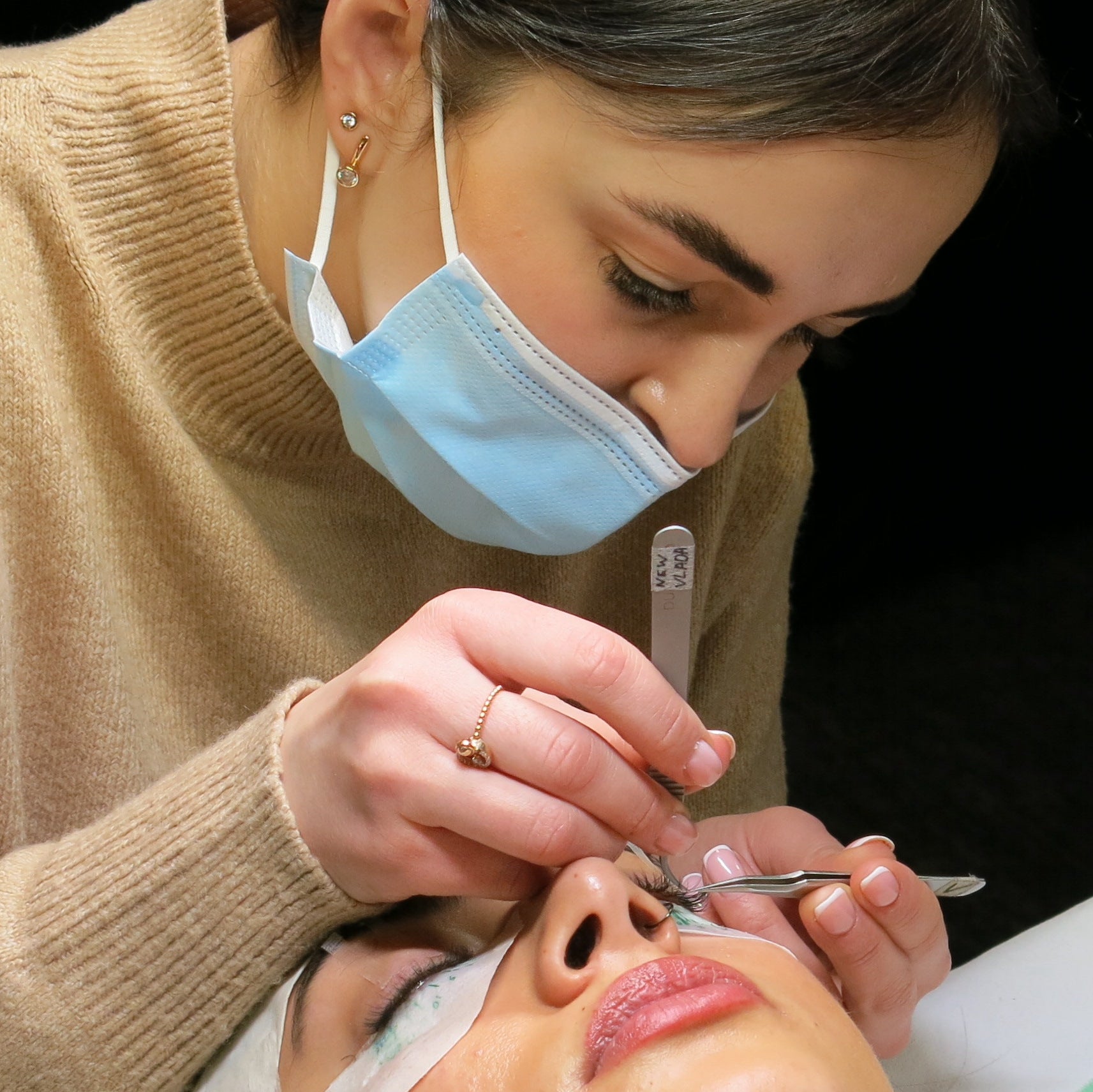
As a Lash Artist, you work with lash glue daily. Your exposure to glue fumes is therefore higher than that of clients who attend a single treatment once a month. Lash Techs should try to reduce this exposure for both themselves and their clients. Repeated exposure can increase the risk of developing sensitivity, so let’s discuss some ways to reduce potential problems.
What You Can Do to Reduce Headaches and Reactions
To reduce exposure to glue fumes, consider both the amount of glue used and where it is positioned. A glue ring brings the adhesive closer to your airways as you work. Instead, consider a glue stone with a protective glue stone sticker, positioned away from your face and your client’s face. The cool surface can help slow the glue drying on the stone, while its stable, flat surface helps reduce the risk of spillage.
Lash Technicians may also use protective equipment such as a Cambridge Mask PRO or protective face shield. Choose equipment according to its manufacturer’s stated purpose and limitations. A face shield provides a barrier against splashes but does not filter adhesive vapours, and a face mask should not be assumed to protect against cyanoacrylate fumes. Suitable ventilation remains essential.

Consider whether an airflow system such as the Glamcor Flow would suit your workspace. Follow the manufacturer’s positioning and operating instructions, and ensure that airflow carries fumes away from both you and your client. An airflow device should support, rather than replace, an appropriate ventilation setup.
At the end of treatment, follow the instructions for Superbonder Sealant. You can learn more in our guide to how and why to use Superbonder for lash extensions. Superbonder helps cure the adhesive, but it should not be presented as preventing allergic reactions or making treatment suitable for a client with a known adhesive allergy.
It is also worth considering whether your setup contributes to headaches. Muscular tightness from an uncomfortable working posture can contribute to headaches and neck pain for you or your clients. Adjust your seating and treatment bed to support a comfortable working position, and ensure your client’s head and neck are supported throughout the appointment.

These practical steps can help reduce exposure and improve comfort during treatments. If headaches or other symptoms keep occurring during or after lash appointments, stop and investigate the cause rather than relying on product changes alone. Persistent or recurring symptoms should be discussed with a healthcare professional.
Check out these featured products